Why Circuit Breakers Exist
Understand circuit breakers as pre-agreed stop rules that protect users when automation behaves outside expectations.
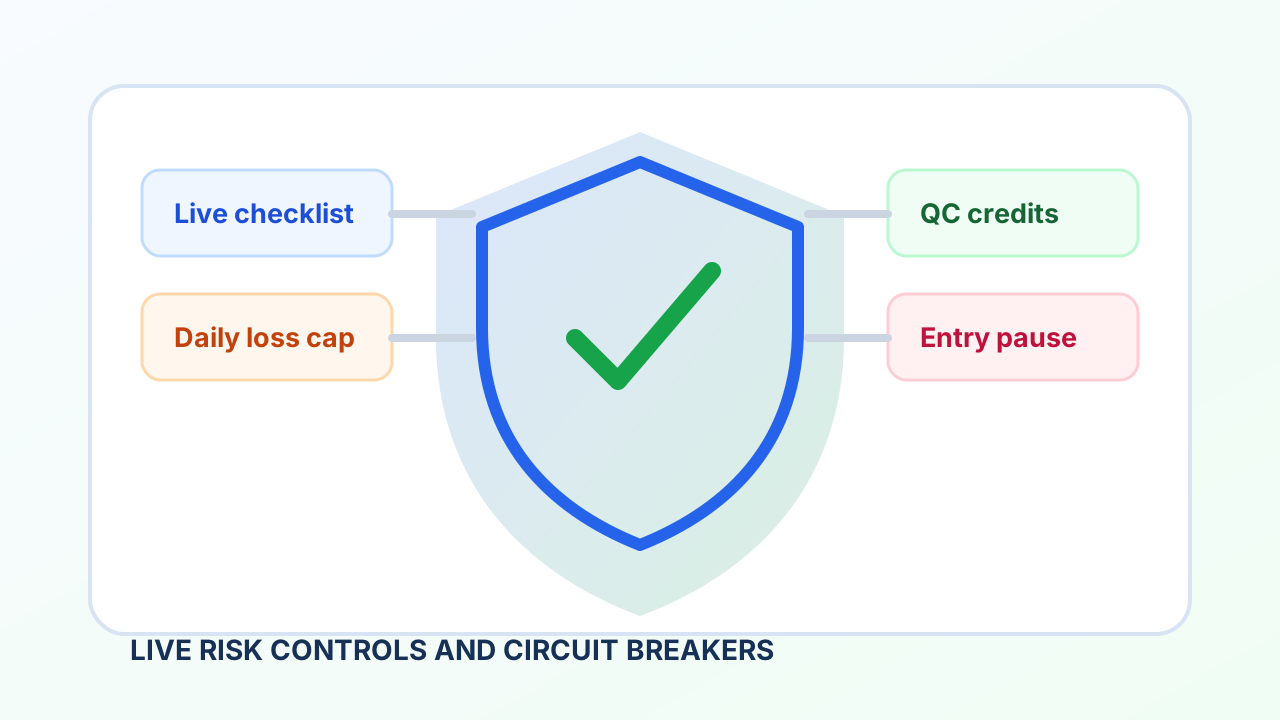
Design daily loss caps, consecutive-loss guards, pause rules, and recovery checks that protect a live account from runaway behavior.
Educational content only. Crypto trading is risky and this course is not financial advice.
Preview lessons are available before enrollment. Full access requires enrollment or unlock.
Understand circuit breakers as pre-agreed stop rules that protect users when automation behaves outside expectations.
Set daily loss limits that match account size, trade frequency, and psychological tolerance.
Use repeated-loss and repeated-error triggers to catch strategy drift or infrastructure problems early.
Keep exchange API keys limited to trading-only permissions and verify the warning before live use.
Clear a circuit breaker only after cause, exposure, settings, and health checks are reviewed.
Circuit breakers are not pessimistic; they are operating discipline. This course shows how to define stop conditions before live trading so the bot cannot keep compounding an avoidable problem.
Design a live-mode risk policy for one bot that includes trigger, pause action, review owner, and resume condition for each breaker.
This course is educational content for safer platform operation. It does not promise profit and should not be treated as financial advice.